Rioconn Interactive Pvt. Ltd.

Blogs

Share on:

Do you sometimes wonder how far along did Twitter come since the inception in 2006? The platform started as a content sharing platform and has evolved into something of prime importance in the fast-paced, ever-dynamic digital world of today.

Today, when the world connects sitting at home, Twitter is where you get all the updates on the fast track. Twitter is becoming the fastest medium to share news, updates, trends, requests, insights, reviews and the humour that we all love to have a look at. 

While content sharing is one of the prime reasons why 192 Million visitors visit Twitter every day, it is also an Advertising Platform. And the various functionalities that Twitter offers is an absolute carnival. Back in the day when sharing on the platform was limited to 120 characters, there were various obstructions. Since they increased the character limit to 240, both users and brands sighed in relief. All the professionals working at a Digital Marketing Agency, across the world, finally saw a breakthrough with the increase in the number of characters. 

Twitter relentlessly came up with different offerings on the platform to capitalize on. These functionalities are both user-friendly and coming of age as they allow the users to share real-time content via Audio-Visuals and Speech. Just like Snapchat and Instagram had the Stories, Twitter came up with a 24 hour-lasting Audio-Visual sharing feature called Fleet. Right from day 1, Twitter saw the users exploit this feature and it quickly became an extra offering that every Digital Marketing Agency provided. 

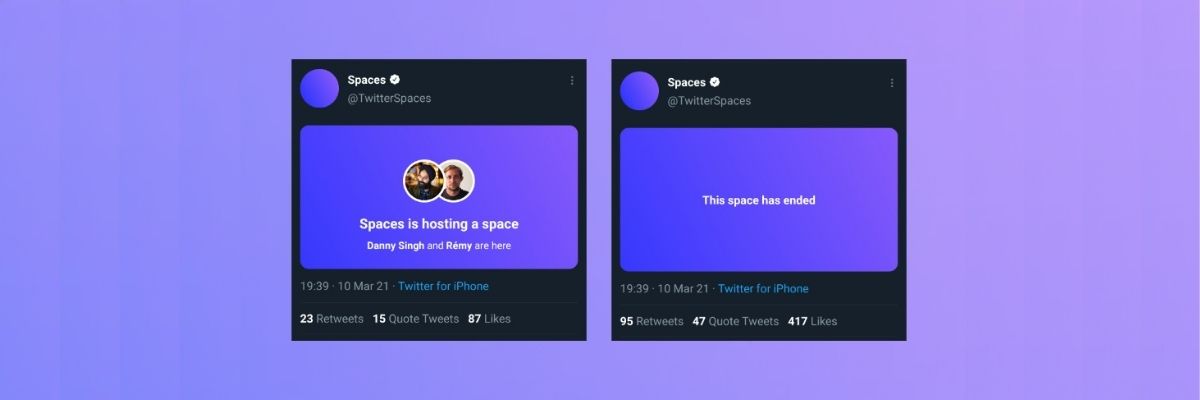
In late 2020, Twitter came up with yet another feature called Spaces. With this, they introduced live audio conversations on the platform. To put it simply- one person goes live with audio and others can tune in to listen to them and react with emojis.

Digital Marketing Agencies that offer Twitter Management and Twitter Advertising saw many possibilities open up after the new features of Twitter were launched. Twitter keeps on surprising its users from time to time with little surprises. Makes you wonder about what could be next?! Well, we don’t know. But believe us, we’ll be the first to let you know once we find out.

Until next time! 


By : Shrijay Parikh

Share on:

Now more than ever, people are holding on to happy memories of the past to cope with the uncertainties of the present. How can you as a brand make the most of this consumer insight? 

Say hello to nostalgia marketing! A ray of hope for marketers, where they tap into happy memories dear to consumers and integrate them into marketing campaigns as an important part of a brand’s dialogue. This way, brands provide a meaningful emotional connection to consumers when they most need it! 

A brand for whom nostalgia marketing worked like magic has been Paperboat. Their entire USP was based on how they presented your favourite ethnic drinks from childhood in a new and exciting avatar. And we all know what a success that has been!

At Rioconn Interactive Private Limited, Ahmedabad’s reputed advertising agency, we seamlessly integrated nostalgia marketing into a DVC for our real estate client, Shilp Group. In a commercial titled, ‘Sambhalna Zaroori Hai, Rukna Nahi’ (link: https://www.youtube.com/watch?v=SMMKExjf9qM) set in 2025,  the protagonist is shown recalling the pandemic gone by. Despite the challenging situation of the past, he chose to buy his dream home then and is seen enjoying the fruit of his investment in the future. Audiences found this content to be very relatable, which increased engagement for the brand and did wonders for us as an agency.

Before you make nostalgia marketing an important part of your brand strategy, understand your target audience thoroughly. If you are designing products for a 12 year old, nostalgia marketing wouldn’t work because their bank of experiences is not so rich and diverse as that of adults. 

On the other hand, if you are a veteran brand like Saregama, a nostalgic product like Caravaan radio would work wonders for you. Choose your TG smartly like Saregama did. They targeted a 40+ audience and understood that the TG struggles to adopt new technology for listening to their favourite songs. Guess who came to the rescue: Caravaan! 

More than ever, nostalgia marketing is a useful tool today because people miss sharing human connections that they took for granted pre-pandemic. You end up building a digital community which shares joy and a sense of togetherness. It also saves extra expense as you are working on an existing intellectual asset, instead of developing a new one. Now that folks, is a huge plus point! 

At Rioconn, we believe in putting together bespoke advertising campaigns for our clients, suited to their unique market positioning. Join us on this content journey as we deep dive into the fascinating world of advertising. Subscribe to our monthly newsletter now!

By : Dhruvy Raval

Share on:

There is not a single soul who hasn’t heard the song – “Main Tera, Main Tera, Main Tera”. Even hardcore Indie lovers might have to listen to this dreadful song (No offense) over and over again on their Instagram feed. But that’s how Instagram’s algorithm works.

After the Tik Tok ban, Mark Zuckerberg immediately launched the short video feature – Instagram REELS. (Well, who doesn’t love a brilliant opportunity!?) Now, you can hear that robotic voice “How did I go from this.. to this..!” even from a passerby’s phone.

While Tik Tok was working like a charm for big brands, Instagram Reels is opening new avenues for small-time players as well.

Without driving the audience to a whole new social media platform, Reel’s feature is working wonders for some of our regional clients such as TGB, Tirupati Edible Oils, and others.

Instagram is pushing video content more than anything. And it is changing our content consumption habits as well. A platform that started as a pure photo-based social media app is now turning into a video-friendly marketplace. Thousands of thrift shops are making reels using influencers and profiting. But what does it hold for big national brands?

Just like Tik Tok, Reels thrive on trending video formats. But so far, it is not working THAT GREAT for big names. Of course, there were many popular campaigns like HDFC’s “Mooh Bandh Rakho” that won countless awards. But did you really see a non-influencer using the filter and the theme song? Nope!

Agencies are yet to crack the code for viral content when it comes to Instagram reels. Instagrammers are not dancing, influencers are. Instagrammers are not using brands’ theme/campaign songs, influencers are. So, what are Instagrammers actually doing? They are still exploring!

As a 360-degree advertising agency, we suggest devising a strategy for reels before pushing your brand towards it. If you can devise a solid digital strategy to use REELS to its full potential, we never know, you might go viral too! 😉

Trending formats, moment marketing, viral parody songs. What started as a fun way to interact with the audience in 2019, is now a nightmare for an advertising agency. Brands/Clients are demanding more of such “engaging content” to bag some profile interactions. But what these brands are unable to realize is the IRRELEVANCE of those moment marketings. 

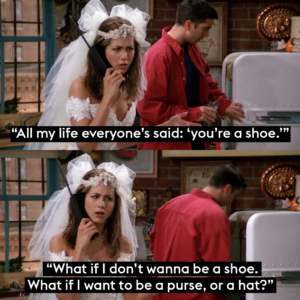
“Not every shoe fits every leg, not every hat fits every head, and not every trending format fits every brand.”

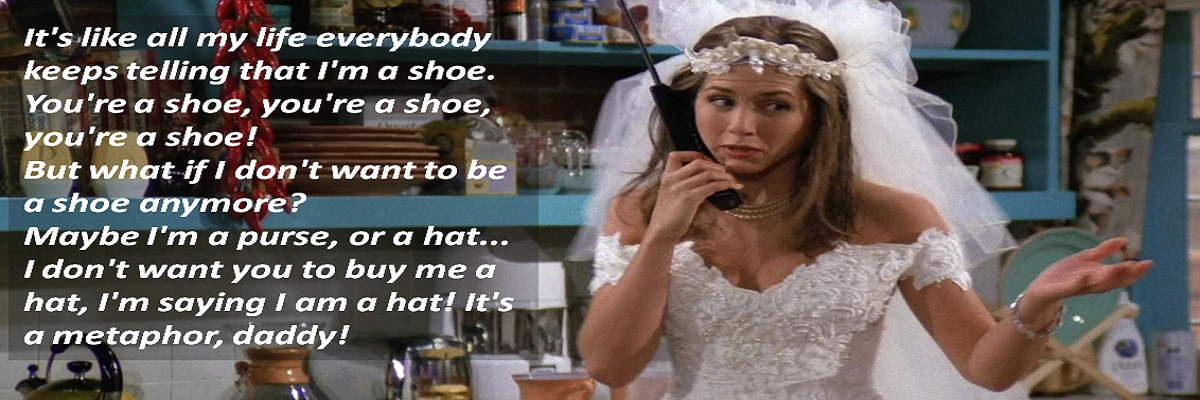
Before jumping into the viral format bandwagon, it is really (really, REALLY) important to think of a brand as an individual with a personality. As Rachel said, what if your brand doesn’t want to be a shoe or a hat? Will you ruin the brand reputation just to fit in someone else’s shoes? 

Think about these questions before catching the viral fever, “What are my brand’s behavioral characteristics (brand tone & voice)? Is my brand traditional, warm, and full of life? Or modern, relatable, and funny?” Trust us, it will help you refine your brand’s SM goals.

Most of the trending formats we see flying on Twitter are either sarcastic, humorous, or meaningless. (Remember, Binod?) And if that format doesn’t fit your brand guidelines or personality traits, ditch it. There will be plenty of fish in the sea. 

It’s really important to stick to the brand value while communicating a single message. The message should not only resonate with the audience but also needs to connect with the core services of the brand. We at, Rioconn Interactive Pvt. Ltd., one of the top advertising agencies in Ahmedabad,  believe in original and insightful content. If you feel the same way, then we are a match made in heaven. For more insightful content like this, subscribe to our monthly newsletter. (Don’t worry, we only spam consumers, not clients 😉

Share on:

Designing a brochure can be both exciting and challenging for a graphic designer. A well-designed brochure makes sure that you leave a lasting impression on your readers. The powers of a high-quality brochure are manifold: it can educate the readers, convey credibility and authority of the company, increase the target audience, and persuade consumers to take action. To translate these ideas into design, you should be well versed with the process. Let’s take a look at what makes a good brochure stand out from the crowd!

Know Your Objective

To make your design effective, it’s important to understand the content you’re designing for. The purpose of the brochure is to point you to the right direction. Is it for a benefit concert? A contest? An advertising tool? An event? Get as much information about the objective of the brochure so that you can use that knowledge to inform your designing process. 

Everything you put into a brochure communicates directly with your audience. The way a brochure is designed is part of the communication itself. This makes it all the more important that you think twice before designing the brochure to give it its identity.

Cater To Your Customers

Since a brochure is a direct communication tool, it’s important that you design it keeping your target audience in mind. Audiences always respond to content they can relate to so if you design a brochure keeping in mind their likes and dislikes, you’ll be able to capture their interest easily.

For instance, if you’re targeting foodies, then choose a design that has something to do with the art of cooking or gastronomical delights. Value a reader’s time and add quality content in the brochure so that the reader takes back something worth remembering. The more you address the needs and wants of your target audience in the brochure, the more engagement you will receive.

Develop Your Message Thoroughly

Now, if you’re unaware of the kind of information that will go into the brochure, take the time to understand the messaging from your salespeople or even your customers. Use their responses to map out the best design for what you’re offering and what the target audience needs.

Once again, we stress on the fact that it’s so, so important that you clearly define your message before the designing begins! You need to know what you’re going to say in your brochure and how you’re going to say it before you even think about design. This is because the message you convey is the most important part of the process. It all comes back to knowing your customer. If you don’t have a strong, clear message communicated in a language your customers understand and with images they can relate to, it doesn’t matter what design you come up with. Your brochure will fall flat.

Be Creative, Be Unique

Today more than ever, it is important that your creativity sets you apart from the competition. In this time and age when the level of creativity of designers is staggering, your uniqueness is of paramount importance.

Aim for a design that is original and unique. Make sure the uniqueness of your design is recognizable. Think of a design that can stand out even when it’s shuffled with other leaflets in a rack. Strengthening the brand’s identity through your unique creativity is highly recommended!

Practice Font Restraints

When you start designing for a project, it’s easy to fall in the trap of going overboard with the fonts you’d like to use. While it can be amusing to see a brochure in multiple fonts, it can also be discouraging for others, particularly for potential customers.

Show restraint when choosing which fonts to use. If your company already has a signature font, then choose to go with it. You can use that font for the entire brochure or you can add one or two more to jazz it up.

Go Straight To The Point

It’s a brochure, not a book.

Steer clear from the temptation of listing down all the achievements and successes of your company. You can also avoid putting in all the information about your product or service. An overload of information will just confuse the readers and dilute the main point of the brochure.

Instead, focus on what will catch the attention of your target audience. Talk about their interests in a crisp and clear manner so that the readers can easily grasp what you’re communicating.

Avoid Big Words

The more you use complex words, the lesser credibility you’ll receive. You don’t have to impress your audience with fuzzy words. In fact, the more you use them, the harder it is for you to convey your main point. For brochures, simple English is the best route to take.

Design For Your Readers, Not For Yourself

Prioritising their own taste in design over that of the target audience is an Achilles heel of many graphic designers

You should know that as a graphic designer, it is your job to create designs that appeal to the target audience and not necessarily to you. Make a habit of putting yourself in their shoes. If the audience responds positively to the color red, even if you hate the shade, incorporate it in the design. Think of it this way: you’re serving at the pleasure of your readers.

Craft Headline Cleverly

The headline of the brochure should instantly tell the readers what the leaflet is all about. For instance, if it’s for advertising, the headline should convey the product or service being offered and what it can do for its user.

One of the most common blunders business owners make with regards to headlines is peppering them with their company’s information. While basic information about the business should be communicated in the brochure, they shouldn’t be highlighted in the headline of the brochure.

Go With The Right Colors

One of the biggest challenges of creating a great brochure is choosing the right colour. Choosing a colour that appeals to every member of your target audience is no easy feat. This is because people respond to colors differently. Some hate a particular color at first sight itself, while others will be instantly drawn to a brochure because of its color.

Just like with fonts, if the company has signature colors, incorporate them in your design, and then branch out to different shades and tones using those trademark colors.

Use High-Quality Paper

When it comes to marketing, flimsy brochure paper is the equivalent of a weak handshake. To make a good impression and promote confidence, wisely choose which paper to use. Choose high-quality paper to stand out. It may be pricier than regular ones but it will show you cared for your brand and made an effort worth remembering for your readers.

Choose Appropriate Images

A brochure without pictures is a boring leaflet. People are visual creatures who tend to get more attracted to something beautiful, intriguing, or fun. Plain text rarely offers this attraction, but images do. 

To make your brochure design more reader-friendly, choose appropriate and relevant images associated with the main theme of the brochure. Also, avoid using generic images. If you need to invest in paid images, then go for it. Or if you have the budget for a photo shoot, then even better!

Add A Call-To-Action

However well-designed your brochure is, if it doesn’t include a call-to-action, it won’t serve its true purpose. Never assume that your audience will buy your product or go to your event just because they’re moved by your beautiful brochure. It doesn’t work that way.

Even if you have an eye-catching brochure, it’s still imperative that you motivate readers to get in touch with you or try what you’re offering with an appropriate call-to-action.

By : Aakash Kansara

Edited By : Dhruvy Rawal

Share on:

Here, we have the second part of brand identity design. Continuing the previous article, we are going to go further deep into the brand building process where design plays a major role.

Brand personality

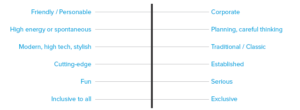
Your clients and customers are looking for an experience tailored to their needs. So, back your design with genuine personal interaction. Without over-thinking, you can use the chart below and place a dot closest to where you think the brand personality fits.

img

Results mostly on the left side?

Your business is more contemporary, and likely fast-moving while embracing the latest technologies. But showing a personality is important. But how? Show personality in your branding with energy and approachability. Be fun and trendy, but with a style that relates to your TG for a long term.

Results mostly on the right side?

If your business is falling into the right side of the char. It relies on process and planning, possibly for higher end clients. Exhibit personality by communicating in a professional and authoritative manner. Share knowledge with a corporate voice, without being too unapproachable.

A mix of results?

Not every brand will fall neatly to one side or the other. And that’s absolutely okay! Sometimes, contrasting attributes can complement each other in unexpected ways. Embrace this, and create the personality that best fits your vision and style, keeping in mind the business values.

Build a brand story & messaging

When brand building, tell customers succinctly who you are. Use the business voice you have chosen. Your message should be intricately associated with your brand, and conveyed in a few sentences.

This part of the brand development process goes beyond your business logo or tagline to define key aspects of who you are, what you offer, and why people should care. A brand message is meant to be communicated on a human level, which helps make a direct emotional connection with your consumers.

Create a brand logo and tagline.

Be willing to invest the time and money by having something exceptional created to reinforce the visual identity of your brand. Your logo will appear on everything that relates to your business. It will become your identity, calling card, and the visual recognition of your promise.

Integrate. Integrate. Integrate. 

Integrate your brand design everywhere it’s necessary. It can be stationary items, billboards, social media, and much more. The identity that you have created is a blueprint for the brand. So, ensure to document the entire process for future advertisers to use. 

Lastly, brand building is an ongoing process. Like how our personality changes, a brand’s personality changes over time too. It has to fit the market demand and trends without losing its core message. 

By : Aakash Kansara

Edited By : Dewangi Gandhrokia

Inquiry