
Walk into any neighbourhood kirana store, and you’ll notice something remarkable.
Before you ask for anything, the shopkeeper is already reaching for your usual brand of tea. He remembers that your family prefers a particular cooking oil. He knows your monthly grocery cycle. If a product you’ve been buying for years isn’t available, he’ll suggest you an alternative, without making it sound like a sales pitch. No customer database. No AI. No loyalty app. Just years of paying attention.
Ironically, many businesses today invest heavily in diverse tools to understand their customers, while the kirana store has been practising these principles for decades. The difference? It never called them Relationship marketing, Personalisation in marketing, or Brand marketing. It simply focused on building trust.
For every digital marketing agency, there’s a lesson waiting behind the counter of a local grocery store.
Lesson 1: Humans Remember How You Make Them Feel
The biggest strength of a kirana store is its familiarity.
A kirana store owner who remembers your shopping habits, your preferred brands or the little treat your child always asks for is not following a CRM workflow. He is simply paying attention to you and your family. And when such moments occur consistently, it changes the tone of our relationship. It organically converts a transactional relation into a personalised relation, with the kirana store owner and kirana store. Personalisation is what the kirana store owner is doing. He is making you feel like you are important to the kirana store.
Today, brands spend thousands on customer retention programmes. The kirana store mastered it years ago with nothing more than genuine conversations. The most influential brands are aware that loyalty takes time to develop. Rather of concentrating on the next purchase, they make investments in relationships that develop with each exchange, encounter, and commitment they make. Relationship marketing is all about that.
Lesson 2: Personalisation Isn’t New. Technology Just Scaled It.
Ever noticed how a kirana owner recommends products? “You bought this atta last month. Want the same one?” That’s not guesswork. It’s observation. Modern marketers call this Personalisation in marketing. E-commerce platforms use browsing history. Streaming platforms recommend your next binge. Food delivery apps know your Friday night cravings.
But the underlying idea is still the same. Consumers value brands that relate to them without being obtrusive. Knowing every detail about your client is not the aim, whether you are managing a brand or collaborating with a marketing agency. To understand what is important to them.
Lesson 3: Trust Travels Faster Than Advertising
Here’s something worth noticing. A kirana store owner doesn’t need to “close the sale.” They’ve already spent months, sometimes years, earning your confidence. So when they suggest a different brand because your usual one is out of stock, you don’t question the motive. You trust the judgement.
That’s a place every brand wants to reach. Not where every campaign performs brilliantly, but where customers believe you have their best interests in mind. That’s the real work of Brand marketing. Logos, taglines, and advertising help people recognise you. Trust gives them a reason to stay.
Lesson 4: Every Small Interaction Shapes Your Brand
Think about all the tiny efforts a kirana owner makes to give that personalised experience.
Helping someone carry heavy grocery bags. Allowing trusted families to settle their bills later. Offering a toffee to a child. None of these moments appear on a balance sheet. Yet each one quietly strengthens customer loyalty.
This is where many brands get it wrong. They believe branding happens only through campaigns. In reality, your brand is built through hundreds of everyday interactions. Every customer support call. Every Instagram reply. Every delivery experience. Every follow-up email. The smallest moments often leave the biggest impressions.
Lesson 6: Being Local Doesn’t Mean Thinking Small
The neighbourhood kirana store knows its community better than anyone else. It stocks products based on local festivals. It adjusts inventory according to seasonal demand. It understands cultural preferences because it’s part of the community itself. That’s the essence of Local business marketing.
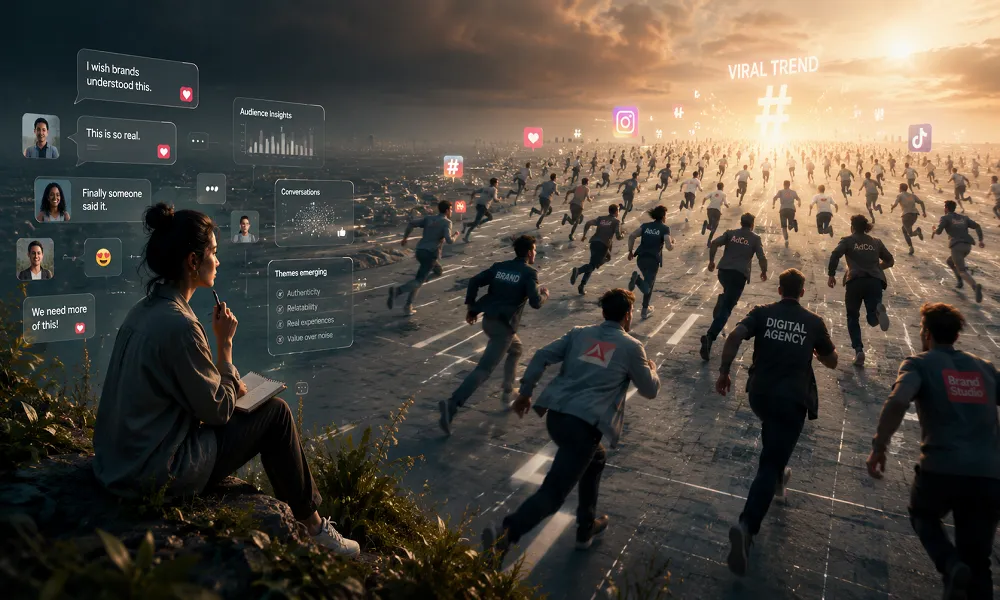
Whether you’re a neighbourhood café or a growing national brand, understanding your audience will always outperform blindly following trends.
Relevance beats reach. Every single time.
Lesson 7: Data Is Powerful. Observation Is Priceless.
Today’s businesses have dashboards filled with customer insights. Traffic reports. Heat maps. Click-through rates. Conversion funnels. They’re all valuable.
But numbers only tell you what happened. Observation helps you understand why it happened.
The kirana owner notices when customers hesitate before choosing a product. He sees which brands people ask for by name and which ones they ignore. Those observations shape better decisions.
The smartest marketers combine data with empathy. That’s where meaningful growth begins.
The Biggest Lesson of All
The neighbourhood kirana store has never described itself as the best digital marketing agency. Yet, without realising it, it has been practising some of the world’s most effective marketing principles for generations.
It understands loyalty before loyalty programmes. Personalisation before algorithms. Community before social media. Trust before advertising.
Perhaps that’s why some of the most enduring businesses don’t rely on complicated tactics. They rely on understanding people. That’s the thinking we bring to every brand at Rioconn. Whether we’re shaping a brand identity, building a social media strategy, running performance campaigns, creating content or digital experiences, we don’t start with platforms. We start with people. Because the strongest ideas don’t come from dashboards alone, they come from understanding what drives human decisions. So, if you’re looking for ideas rooted in people, not just platforms, let’s start a conversation.